
Streamline your business online
Empower Your Operations
This is the title
Introduction
Running a business in the digital age requires the right tools. From managing your website and domain to streamlining workflows with CRM systems, the online business tools you choose can make or break your online success.
This guide covers the essential online business tools every company needs — whether you’re a startup, restaurant, or established enterprise. Learn how to select, implement, and optimize these tools to save time, improve productivity, and grow your business.
To operate a successful, scalable growth-oriented endeavor, building a strong, integrated business software stack is essential.
Be sure to review our Business Tools Checklist
1. Website & Domain Management Tools
Your website is your 24/7 digital storefront, and choosing the right tools is crucial for reliability and performance.
Key Tools & Tips:
-
Domain Registration & Management: Select a domain that is memorable, brandable, and SEO-friendly. Learn more about domain and hosting options.
-
Hosting Platforms: Shared hosting, managed hosting, and cloud hosting for speed and security.
-
Website Builders & CMS: WordPress, Squarespace, or other platforms for easy updates and customization. Talk to a website development team, explore web builders, and CRMs.
2. Customer Relationship Management (CRM) Tools
Managing your customers efficiently is critical for growth. CRM platforms centralize contacts, sales pipelines, and communications.
Benefits of CRM Tools:
-
Track leads and sales progress
-
Automate customer follow-ups
-
Organize customer data for better insights
View CRM options | Why do you need a CRM?
3. Collaboration & Productivity Tools
Smooth internal communication and team collaboration are key to running a digital business.
Essential Tools:
-
Project management platforms (Asana, Basecamp, Teamwork, Zoho, ClickUp, Trello, Monday.com)
-
Email & calendar systems (Google Workspace, Outlook)
-
Communication apps (Slack, Microsoft Teams)
4. Security & Compliance Tools
Protecting your business and your customers is non-negotiable.
Key Focus Areas:
-
SSL Certificates & HTTPS: Secure your website traffic
-
Data Protection: Regular backups and secure passwords
-
Accessibility: Ensure your site meets ADA compliance standards
ADA Solution | Why ADA for Restaurants | What you need to know | Tax Credit
5. Analytics & Optimization Tools
Understanding performance helps you make smarter business decisions.
Essential Tools:
-
Google Analytics / Search Console
-
SEO performance tools - view marketing tools
-
Conversion tracking platforms
Conclusion
The right online business tools simplify operations, improve customer experience, and drive growth. By combining website and domain management, CRM, collaboration platforms, security/compliance, and analytics tools, your business can operate efficiently, make smarter decisions, and scale successfully.
Get Started
Start building your digital toolkit today — explore our Hosting & Domain Services and Digital Marketing Packages to take your business to the next level.
FAQs — Online Business Tools
Q1: What are online business tools?
A: Online business tools are digital platforms and software that help businesses manage their operations, marketing, sales, and productivity. Examples include website builders, CRM systems, collaboration apps, and analytics tools.
Q2: Why do I need a CRM for my business?
A: A CRM (Customer Relationship Management) system centralizes customer information, tracks sales pipelines, automates communication, and helps your team deliver better service — ultimately improving customer relationships and increasing revenue.
Q3: How do I choose the right website and hosting platform?
A: Consider your business size, expected traffic, budget, and technical skills. Managed hosting is ideal for growing businesses, while DIY builders or WordPress are flexible options for smaller teams. Security, speed, and support are key factors.
Q4: What productivity tools should my team use?
A: Productivity tools include project management apps (Asana, Trello), communication platforms (Slack, Microsoft Teams), and collaboration tools (Google Workspace, Office 365). Choose tools that integrate well with your existing workflows.
Q5: How do I ensure my website is secure and compliant?
A: Use SSL certificates for HTTPS, keep software updated, implement strong passwords, and follow accessibility guidelines like ADA compliance. Regular backups and monitoring are also essential.
Q6: Can analytics tools really improve my business?
A: Yes! Analytics tools like Google Analytics and SEO dashboards provide insights into website performance, traffic sources, and user behavior. These insights help optimize marketing strategies, improve conversions, and grow your business.
Q7: How do these tools work together in a business stack?
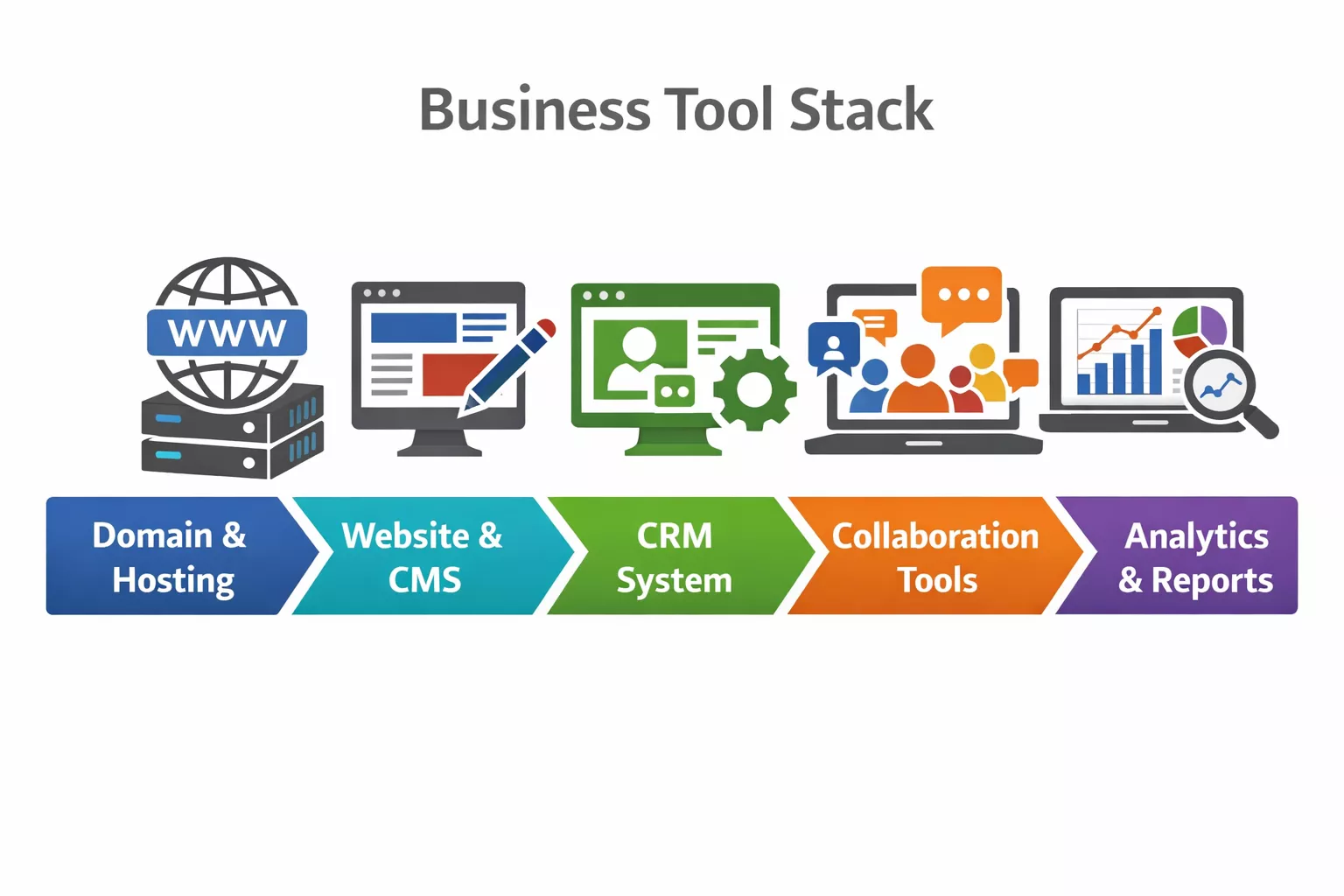
A: Each tool addresses a specific need — domains and hosting build your foundation, CMS manages content, CRM manages relationships, collaboration tools streamline operations, and analytics tracks performance. When used together, they create an integrated system for efficiency and growth.