
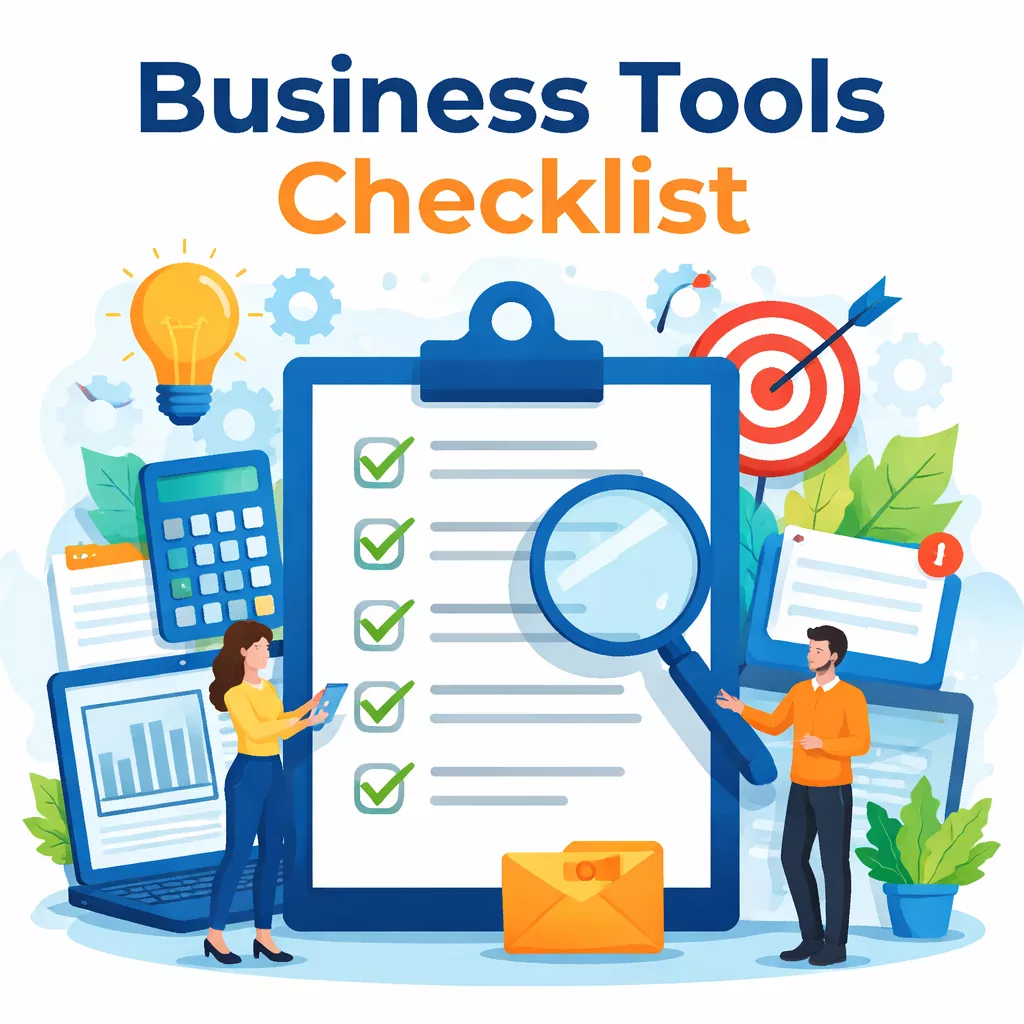
Running a successful business requires the right combination of digital tools to manage operations, marketing, customer relationships, and productivity.
This business tools checklist helps you identify essential software and platforms your company needs to streamline workflows, save time, and grow efficiently.
From CRM systems and project management software to marketing automation platforms, analytics tools, and financial management apps, a clear checklist ensures no critical component is overlooked.
Whether you’re a small business starting or a growing organization scaling operations, following this checklist will help you build a strong, integrated technology stack that supports every aspect of your business and ensures you have the correct online business tools.
Core Categories in Your Business Tools Checklist
CRM and Customer Management
- Track leads, manage contacts, and automate follow-ups
- Popular tools: Zoho CRM, HubSpot, PipelineCRM, Salesforce
- Benefits: Improved lead conversion, centralized customer data, better retention
Learn more about CRM platforms
Business Automation Tools
- Automate repetitive workflows, approvals, and reporting
- Popular tools: Zapier, Odoo, Asana, Teamwork, Zoho
- Benefits: Increased efficiency, reduced errors, consistent operations
Learn more about Automated Tools
Marketing Tools
- Manage SEO, social media, content marketing, newsletters, and directories
- Popular tools: Mailchimp, Buffer, Ahrefs, DiiB, SEMrush, Hootsuite,
- Benefits: Streamlined campaigns, consistent messaging, measurable results
Do it yourself with AI-driven SEO tools | DiiB vs SEMrush
Productivity & Collaboration Tools
- Project management, team communication, document sharing
- Popular tools: Slack, Google, Microsoft Teams, Trello, Monday.com
- Benefits: Efficient teamwork, real-time updates, transparent task management
Book a free consultation or ask the AI Chatbot
Analytics & Reporting Tools
- Monitor website performance, sales, marketing ROI, and customer behavior
- Popular tools: Google Analytics, Zoho Analytics, Ahrefs Analytics, Tableau, HubSpot Analytics
- Benefits: Data-driven decisions, improved strategy, measurable growth
Financial & Payment Tools
- Manage invoices, payroll, and payment processing
- Popular tools: QuickBooks, Zoho Books, Stripe, Xero, PayPal
- Benefits: Accurate financial reporting, timely payments, simplified accounting
Speak to one of our consultants for recommendations or installation assistance.
How to Use This Checklist Effectively
-
Evaluate your current tools and identify gaps
-
Choose platforms that integrate or sync with your existing systems
-
Prioritize essential tools first (CRM, automation, marketing)
-
Scale up with additional tools as your business grows
-
Regularly review your checklist to ensure efficiency and scalability
FAQs – Business Tools Checklist
Q1: What is a business tools checklist?
A: A business tools checklist is a structured list of essential software and platforms a business uses to manage operations, marketing, customer relations, and productivity efficiently.
Q2: Why do I need a checklist for business tools?
A: A checklist ensures you have all critical tools in place, avoids gaps in operations, and helps you build an integrated, efficient technology stack.
Q3: Should I use integrated platforms or separate tools?
A: It depends on your needs. Integrated platforms like Zoho One or Odoo centralize multiple functions, while stand-alone tools like Asana, QuickBooks, or HubSpot may provide deeper functionality. Many businesses use a hybrid approach.
Q4: Can this checklist help with marketing automation?
A: Yes. The checklist includes tools for SEO, social media management, content marketing, newsletters, and directory synchronization to streamline marketing efforts.
Q5: How often should I update my business tools checklist?
A: Review your checklist at least annually or whenever your business grows or changes operationally, to ensure tools remain efficient, compatible, and scalable.