


Intro
What Are CRM Tools
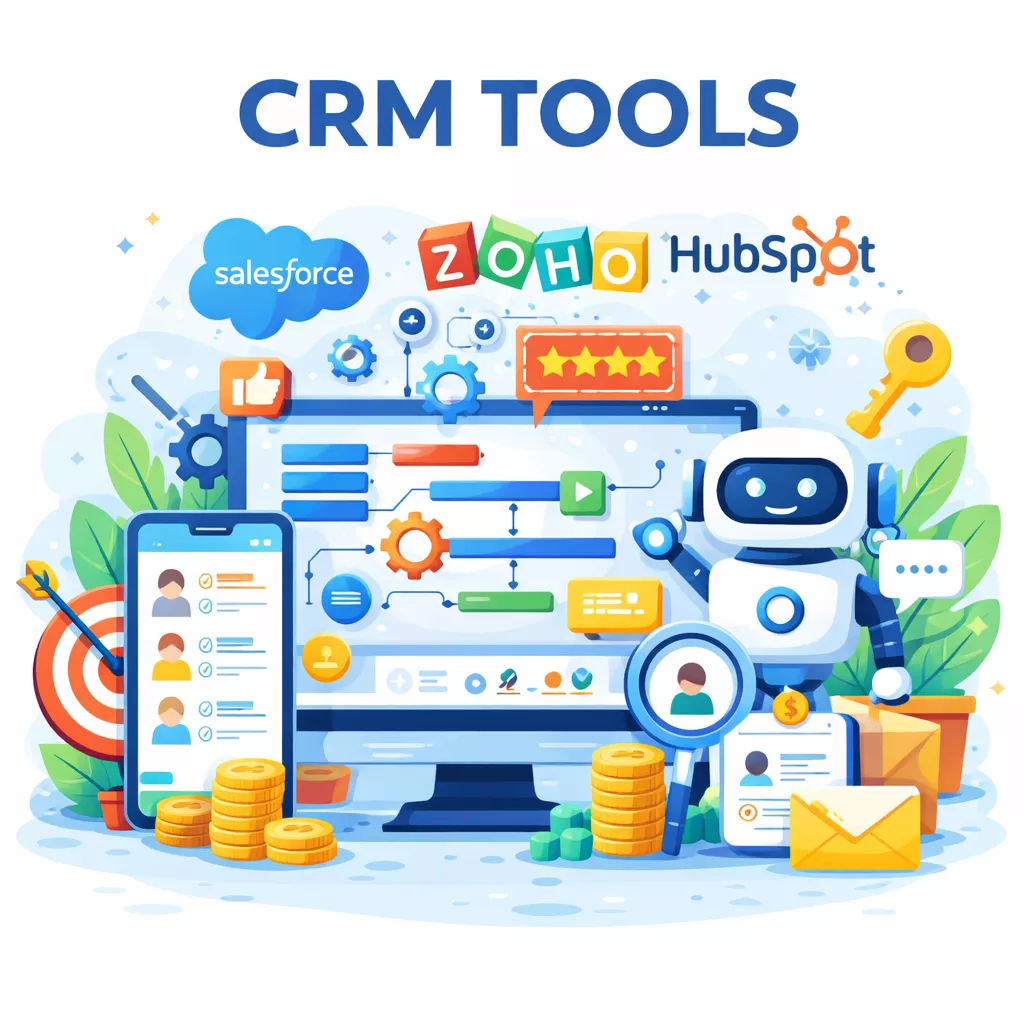
CRM tools are software platforms that manage customer interactions, sales opportunities, communication history, and marketing campaigns in a centralized system. They are one of many business automation tools that increase workflow productivity
Common features include:
- Contact and lead management
- Sales pipeline tracking
- Email and communication logging
- Task automation
- Reporting and analytics
- Marketing automation integrations
Our top recommendations for CRM Software Platform options
Key Features to Look for in CRM Tools
Lead and Contact Management
Track prospects, customers, and interactions in a centralized database.
Sales Pipeline Automation
Visual pipeline tools help teams manage deals and forecast revenue.
Workflow Automation
Visual pipeline tools help teams manage deals and forecast revenue.
Reporting and Analytics
Measure conversion rates, pipeline performance, and customer engagement.
How CRM Tools Improve Business Growth
Businesses using CRM platforms gain:
- Improved lead conversion rates
- Faster sales cycles
- Better customer retention
- Stronger marketing personalization
- Centralized customer insights
Five Reasons to Use a CRM | How to Ignite Sales with CRM Platforms
Choosing the Right CRM Tools for Your Business
The right CRM platform depends on:
- Team size
- Sales complexity
- Integration needs
- Automation requirements
- Budget
Companies focused on rapid growth typically benefit from scalable CRM systems with automation, reporting, and API integrations.
Be sure to review the business tools checklist




FAQs
What are CRM tools used for?
CRM tools are used to manage customer data, track leads, automate communication, and monitor sales performance.
Which CRM tools are best for small businesses?
Small businesses typically benefit from CRM platforms that offer automation, pipeline tracking, and affordable pricing tiers.
Do CRM tools improve sales performance?
Yes. CRM tools improve sales performance by organizing customer data, automating follow-ups, and providing analytics that help teams close deals faster.
Are CRM tools necessary for growing companies?
As businesses scale, CRM tools become essential for managing customer relationships, tracking opportunities, and maintaining consistent communication.