What Is a Small Business Software Stack?
A small business software stack is the collection of digital tools a company uses to manage daily operations, marketing, customer relationships, financial tracking, and productivity.
The right combination of tools improves efficiency, reduces redundancy and manual work, and allows businesses to scale more effectively.
Building a well-structured business tool stack ensures that your systems work together, creating a seamless workflow across departments.
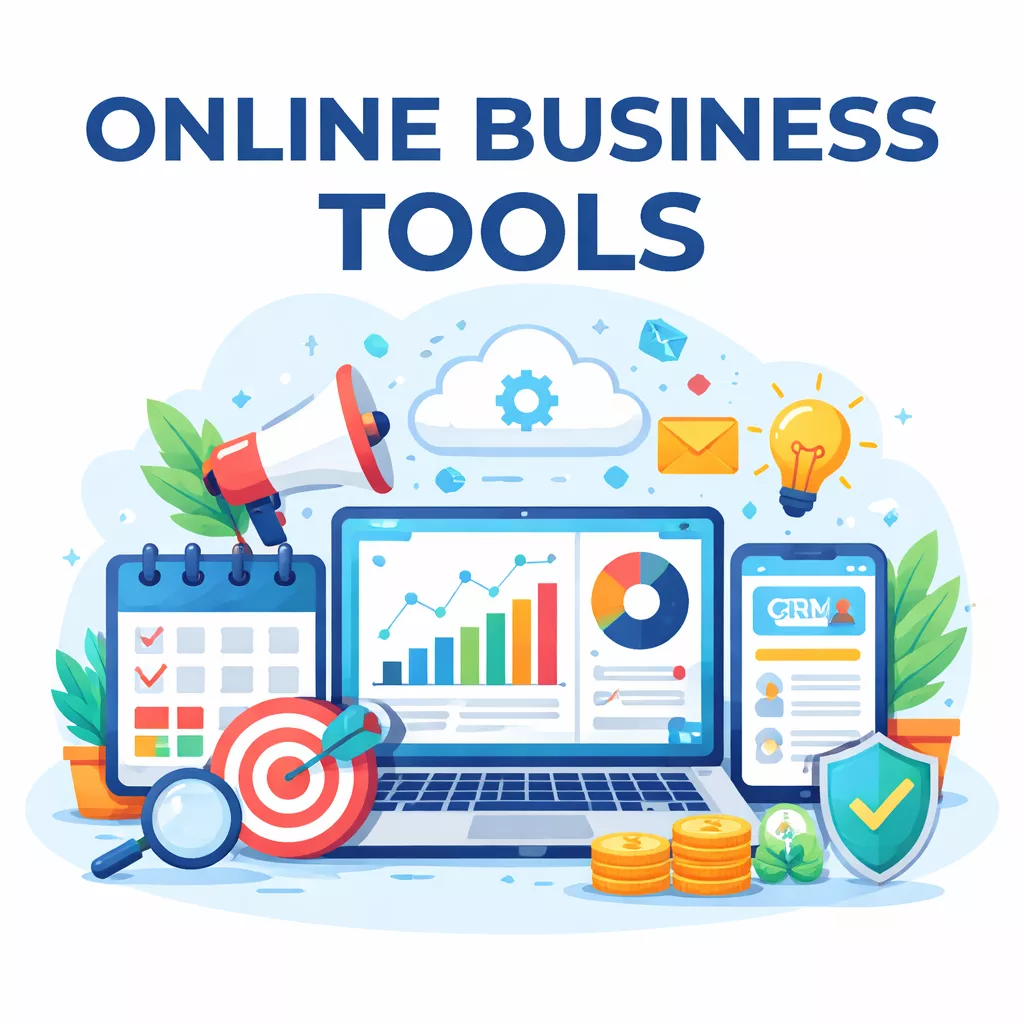
Explore an overview of online business tools and the purposes they each serve.
Core Components of a Small Business Software Stack
1. Website and Hosting Tools
Your website is the foundation of your online presence. Businesses need reliable hosting, domain management, and website platforms to maintain performance and security.
Key tools typically include:
-
SSL security tools (ask us) should be included in any web hosting platform you choose to use
These tools ensure your business remains accessible, secure, and scalable.
2. Customer Relationship Management (CRM) Tools
CRM platforms help businesses track leads, manage contacts, and improve customer communication. With a CRM, companies can automate follow-ups, monitor sales pipelines, and maintain organized customer records.
CRM tools help businesses:
-
Track prospects and customers.
-
Improve sales efficiency
-
Automate customer communications
-
Increase retention and loyalty.
More about CRMs | Learn the 5 reasons you need a CRM | How a CRM Supercharges your sales cycle
3. Collaboration and Productivity Tools
Teams rely on productivity software to manage tasks, communicate, and coordinate projects. These tools help businesses operate efficiently, whether teams are remote, hybrid, or office-based.
Common collaboration tools include:
-
Project management platforms - such as Zoho Projects, Asana, Teamwork, or Basecamp.
-
Team communication software
-
File sharing and document collaboration systems
-
Task tracking systems
4. Analytics and Reporting Tools
Data-driven decisions are essential for growth. Analytics tools allow businesses to track website performance, customer behavior, marketing results, and operational efficiency.
Analytics tools help:
-
Measure campaign performance
-
Track website traffic and conversions
-
Identify growth opportunities
-
Improve strategic decision-making
5. Security and Backup Tools
Protecting business data is critical. Security solutions help prevent cyber threats, safeguard customer information, and ensure business continuity through backups and monitoring systems.
Essential security solutions include:
-
Website security monitoring
-
Backup systems
-
Malware protection
-
Compliance and privacy tools
Need help? Ask our chatbot or schedule a free video call.
How to Choose the Right Software Stack
When selecting tools for your business, consider scalability, integration capabilities, ease of use, and long-term cost efficiency. The best technology stack supports both current operations and future growth without requiring constant replacement or restructuring.
The stack will depend on your operations work cycle, who needs to communicate with whom, and which departments need full integration—i.e., projects and task management integration with ticket support and billing. Some businesses require all these to be fully integrated. In contrast, others may find a stand-alone task management system that works better for them and can be used alongside billing, even if it is not fully integrated. Each business work cycle will have different requirements. So you need to research and develop an operations map BEFORE you make commitments to software, systems, and platforms.
Businesses that implement an integrated software ecosystem typically experience improved productivity, better customer experiences, and more efficient operational management.
Review the business tools checklist
Build a Smarter Business Tool Stack
Choosing the right small business software stack can significantly improve performance, organization, and growth potential. By combining website infrastructure, CRM systems, productivity tools, analytics, and security solutions, businesses create a strong digital foundation for long-term success. Online business tools can make the difference between growth and efficiency, or stagnation and redundancy.
FAQs — Small Business Software Stack
What is a fully integrated business software system?
A fully integrated business software system combines multiple operational tools—CRM, accounting, project management, marketing, analytics, and communication—into a single platform that shares the same database. Integrated systems reduce manual data entry, improve reporting accuracy, and streamline workflows across departments.
What are examples of fully integrated business platforms?
Popular integrated platforms include Zoho One and Odoo, which offer all-in-one ecosystems that integrate across all company departments, for example, CRM, accounting, project management, HR, marketing automation, and collaboration tools. These platforms are designed to centralize operations and simplify technology management for growing businesses.
How do integrated platforms compare to stand-alone tools?
Integrated systems such as Zoho One and Odoo provide unified dashboards, centralized data, and built-in automation across business functions. Stand-alone tools such as Asana, Teamwork, or QuickBooks often offer deeper functionality in specific areas. Still, they may have limited functionality when integrating with other systems or require third-party integrations (such as Zapier) to connect one system with other software in your stack. Many businesses use a hybrid approach, combining specialized tools with selected integrated platforms.
When should a business choose a fully integrated system?
Businesses should consider integrated systems when managing multiple disconnected tools becomes inefficient, when data synchronization is causing reporting issues, or when scaling operations requires automation across departments. Integrated systems are particularly useful for companies planning long-term growth and operational standardization.
What online marketing tools should be included in a business software stack?
A complete business software stack often includes marketing tools for:
-
Marketing analytics and conversion tracking
These tools help businesses maintain visibility, manage online reputation, and generate consistent leads.
You might also consider adding an AI-powered chatbot to your site to converse with potential customers, answer their questions, and even book meetings for you.
Are marketing tools typically integrated into business platforms?
Many modern integrated platforms now include built-in marketing automation, email campaigns, and CRM-driven marketing workflows. However, some businesses still prefer specialized stand-alone marketing platforms for advanced campaign features or niche capabilities.
How often should a business update its software stack?
Businesses should review their software stack annually or whenever operational growth introduces inefficiencies. Regular evaluations ensure tools remain scalable, secure, and aligned with evolving business goals.
Can small businesses start with stand-alone tools and later move to an integrated system?
Yes. Many small businesses begin with stand-alone tools to minimize startup costs and later transition to integrated platforms as operations expand. Migration planning, data structure organization, and integration compatibility should be considered early to simplify future transitions. Ask the AI Chatbot here to book a free consulation for you.